

Introduction
Ski jumping is one of the most thrilling winter sports in the world. Watching athletes glide through the sky for several seconds often leaves people amazed and curious. Many fans ask, how is it possible for ski jumpers to stay in the air so long and how do they train for that? The answer combines physics, athletic skill, balance, aerodynamics, and years of intense preparation.
Professional ski jumpers are not simply falling after they leave the ramp. They use air resistance and body positioning to create lift, helping them remain airborne longer than most people expect. Modern ski jumping techniques allow athletes to travel extraordinary distances while maintaining control in the air.
The Science Behind Long Flights
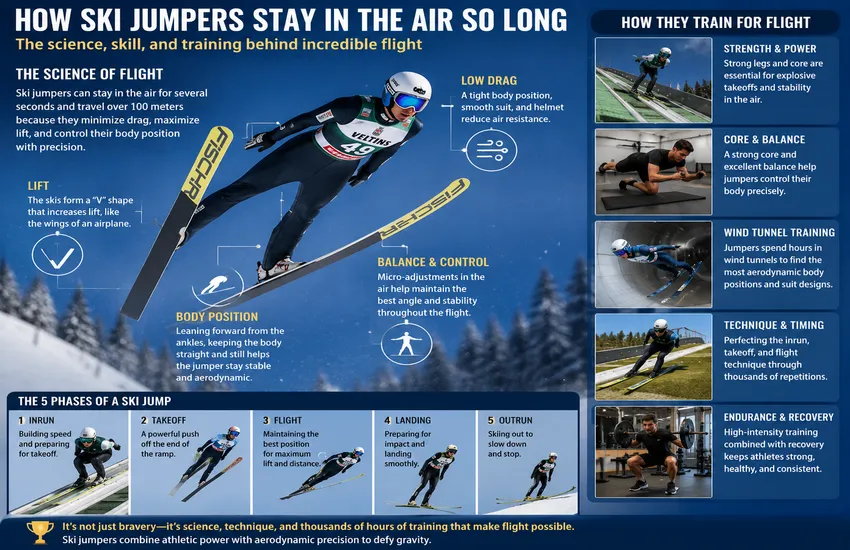
To understand how is it possible for ski jumpers to stay in the air so long and how do they train for that?, it is important to know how aerodynamics work. Aerodynamics is the way air moves around an object. Ski jumpers carefully position their skis and bodies to maximize lift and reduce drag.
When the athlete launches from the ramp, their skis form a V-shape. This technique helps trap air underneath the skis, creating upward pressure. The effect is similar to how airplane wings generate lift. The jumper leans forward with the body almost parallel to the skis, helping air flow smoothly around them.
Speed is another major factor. Athletes race down the inrun ramp at speeds close to 90 to 95 kilometers per hour before takeoff. That momentum helps them travel farther while the aerodynamic body position keeps them in the air longer.
Importance of Body Position
One of the biggest reasons people wonder how is it possible for ski jumpers to stay in the air so long and how do they train for that? is because the athletes appear to float effortlessly. In reality, every movement matters.
Jumpers must keep their body balanced perfectly during flight. Even a slight mistake in posture can reduce lift or create instability. Their arms stay close to the body while the head remains low to minimize wind resistance. The body acts like a carefully designed flying machine.
Professional athletes train for years to master this position. Coaches analyze slow-motion videos of jumps to correct even the smallest errors. Proper positioning can mean the difference between an average jump and a record-breaking performance.
Strength Training for Ski Jumpers
Ski jumping requires explosive power and excellent coordination. Athletes spend countless hours building lower-body strength because strong legs are necessary for a powerful takeoff.
Exercises such as squats, lunges, deadlifts, and plyometric jumps are common in training programs. Core workouts are equally important because the abdominal and back muscles stabilize the body during flight.
When discussing how is it possible for ski jumpers to stay in the air so long and how do they train for that?, strength training is always part of the answer. Without powerful muscles and body control, athletes would not be able to maintain the proper flight position.
Balance and Coordination Practice
Balance is one of the most important skills in ski jumping. Athletes practice on unstable surfaces like balance boards, Bosu balls, and gymnastic equipment to improve coordination.
These exercises help ski jumpers react quickly to movement changes during flight. Wind conditions can shift suddenly, and athletes must make tiny adjustments while traveling at high speeds.
Training also includes agility drills and coordination exercises that improve reaction time. Coaches focus on making movements smooth and precise because stability in the air is essential for both performance and safety.
Year-Round Training Methods
Many people assume ski jumpers only train during winter, but that is not true. Athletes practice throughout the year using specially designed plastic-covered ramps that simulate snow conditions.
Summer training helps athletes maintain their technique and fitness even when there is no snow. Some training centers also use wind tunnels where jumpers study how air flows around their body.
This year-round preparation is another reason how is it possible for ski jumpers to stay in the air so long and how do they train for that? has such a complex answer. The sport requires continuous learning and adaptation.
Mental Preparation and Confidence
Ski jumping is not only physical. Mental strength plays a huge role in success. Standing at the top of a large ski jump can feel intimidating, especially when athletes know they will be flying long distances through the air.
Sports psychologists often work with ski jumpers to improve focus and confidence. Visualization is a common technique where athletes mentally rehearse every stage of the jump before competing.
Fear and hesitation can affect timing and body control, so maintaining confidence is critical. Experienced jumpers learn how to stay calm under pressure and trust their training.
Equipment and Technology
Modern ski jumping equipment has improved significantly over the years. Lightweight skis, aerodynamic helmets, and specially designed suits all help athletes achieve longer flights.
Competition suits are tightly regulated because small differences in material can affect airflow. Ski length is carefully matched to the athlete’s height and weight to ensure fairness and safety.
Advanced technology also helps coaches analyze performance. High-speed cameras and motion tracking systems allow teams to study every detail of a jump.
Landing Techniques
Landing safely after a long flight is one of the hardest parts of ski jumping. Athletes use the telemark landing technique, where one foot lands slightly ahead of the other.
This method improves balance and helps absorb impact. Judges also award higher scores for clean telemark landings.
People who ask how is it possible for ski jumpers to stay in the air so long and how do they train for that? are often surprised to learn that landing practice is just as important as takeoff and flight training.
Conclusion
The mystery behind how is it possible for ski jumpers to stay in the air so long and how do they train for that? comes down to science, athletic ability, and years of disciplined practice. Ski jumpers combine speed, aerodynamics, strength, balance, and mental focus to achieve remarkable flights.
Every successful jump is the result of detailed preparation and precise technique. From intense gym workouts to wind tunnel analysis and mental conditioning, ski jumpers dedicate their lives to mastering one of the most demanding sports in the world.
