

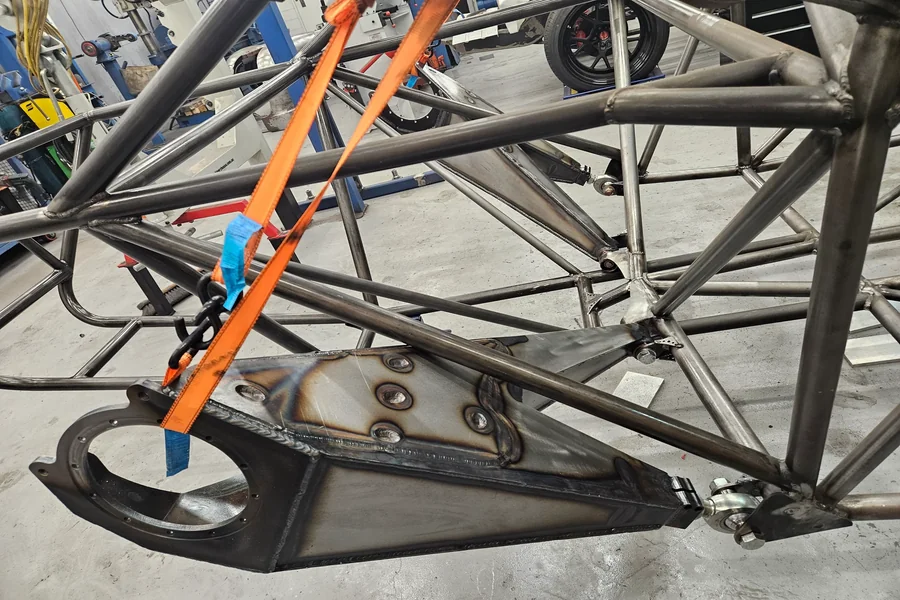
Introduction: Australia’s Role in Structural Engineering Materials
Australia is a major global source of raw materials and metallurgical inputs used in high-performance chassis construction. The country’s vast mineral resources, combined with advanced refining and alloy development capabilities, contribute to the production of metals that meet the strict demands of automotive, industrial, and heavy-duty engineering. Chassis systems require materials that balance strength, weight efficiency, fatigue resistance, and manufacturability. Australian-sourced materials are widely valued because they offer consistency in composition and performance, which allows engineers to design structural frameworks with predictable behavior under load. From road vehicles to off-highway machinery, these materials help form the backbone of structures that must endure vibration, impact, and long-term mechanical stress.
Iron Ore Foundations and Steel Production Inputs
At the core of chassis manufacturing lies steel, which begins with high-quality iron ore extraction. Australian iron ore is known for its purity and low impurity levels, which makes it especially suitable for producing strong and uniform steel products. When refined, this ore becomes the foundation for a wide range of structural steels used in load-bearing applications. The chemical consistency of the ore allows metallurgists to control the final alloy composition more precisely, improving reliability in chassis applications. This is especially important in structural frameworks where uneven material behavior can lead to weak points or fatigue failures over time. The reliability of the raw material supply chain is therefore a major advantage in high-grade chassis engineering.
High-Strength Structural Steels in Chassis Design
Chassis construction relies heavily on high-strength, low-alloy steels designed to provide maximum structural integrity without excessive weight. These steels are engineered with carefully balanced elements such as manganese and silicon to enhance toughness while maintaining flexibility under stress. The goal is to create a material that can absorb energy during impact without cracking or permanently deforming. This is particularly important in vehicle chassis systems, where safety and durability depend on controlled deformation during collisions or heavy loading conditions. The uniformity of Australian-derived steel inputs contributes to improved grain structure consistency, which in turn enhances fatigue resistance in welded and formed chassis components.
Heavy-Duty Applications and Real-World Stress Testing
In industrial environments such as mining and construction, chassis systems are exposed to extreme operating conditions. Continuous vibration, heavy payloads, and uneven terrain create complex stress cycles that challenge even the strongest materials. These environments effectively serve as real-world testing grounds for advanced structural metals. Engineers often analyze how chassis components behave under repeated loading and adjust material selection accordingly. In some vehicle development programs, testing includes integration scenarios such as chassis suspension Melbourne engineering trials, where suspension geometry and structural response are evaluated under controlled urban and industrial simulations. These tests help refine how materials respond to dynamic forces over extended service life.
Aluminum Alloys and Lightweight Structural Efficiency
Beyond steel, aluminum alloys play an increasingly important role in modern chassis construction. Aluminum is valued for its high strength-to-weight ratio, making it ideal for applications where reducing mass improves efficiency and performance. When alloyed with elements such as magnesium and silicon, aluminum can achieve impressive structural strength while remaining significantly lighter than steel. This allows engineers to reduce overall vehicle weight without compromising safety or rigidity. In chassis design, aluminum is often used in subframes, reinforcement sections, and modular structural elements where weight reduction is a priority. Its natural resistance to corrosion also makes it suitable for environments exposed to moisture and temperature variation.
Corrosion Resistance and Fabrication Performance
Chassis systems must maintain structural integrity even when exposed to harsh environmental conditions such as humidity, salt exposure, and abrasive particles. To address this, modern structural steels often undergo protective treatments that enhance corrosion resistance. Coatings based on zinc and aluminum compounds form protective barriers that slow oxidation and extend service life. In addition to corrosion protection, weldability is a key factor in chassis fabrication. Low impurity content in Australian-derived materials reduces the risk of weld cracking and improves joint strength. This ensures that welded sections of the chassis maintain consistent mechanical properties across all connection points, which is critical for long-term durability and safety performance.
Advanced Composites and Material Innovation
Modern chassis engineering increasingly incorporates composite materials alongside traditional metals. Carbon fiber reinforced polymers and hybrid structures are used in high-performance applications where reducing weight is essential. These materials offer exceptional stiffness and strength while significantly lowering mass compared to metals. However, integrating composites into chassis systems requires advanced bonding techniques and careful structural design to ensure load transfer between different materials. Research in material science continues to improve how composites interact with metallic frameworks, allowing engineers to combine the best properties of both material classes in a single chassis architecture.
Sustainability and the Future of Structural Materials
Sustainability is becoming a central focus in the development of high-grade structural materials. Efforts are being made to reduce energy consumption in metal processing and increase the use of recycled inputs in steel and aluminum production. Lower-emission refining methods and more efficient alloying techniques are being explored to reduce the environmental impact of chassis material manufacturing. At the same time, engineers are designing structures that use less material overall without sacrificing strength, through optimized geometry and advanced simulation tools. The future of chassis construction will likely involve a combination of high-performance metals, composites, and sustainable production methods, ensuring that durability and environmental responsibility advance together.
